
Enterprise intelligence,
in writing.
SVARA Knowledge Hub is the definitive resource for Enterprise Intelligence Infrastructure — a comprehensive collection of definitions, research, standards, case studies, and educational content about the Intelligence Loop, its capabilities, products, and applications.
One Architecture, Every Environment
The environment changes. The intelligence architecture adapts. Beneath four very different industries lies one common architectural pattern.
28–34 minutes read
Blog
Definitive explainers on the ideas behind autonomous intelligence — written to answer the question, not to sell the feature.
05 published
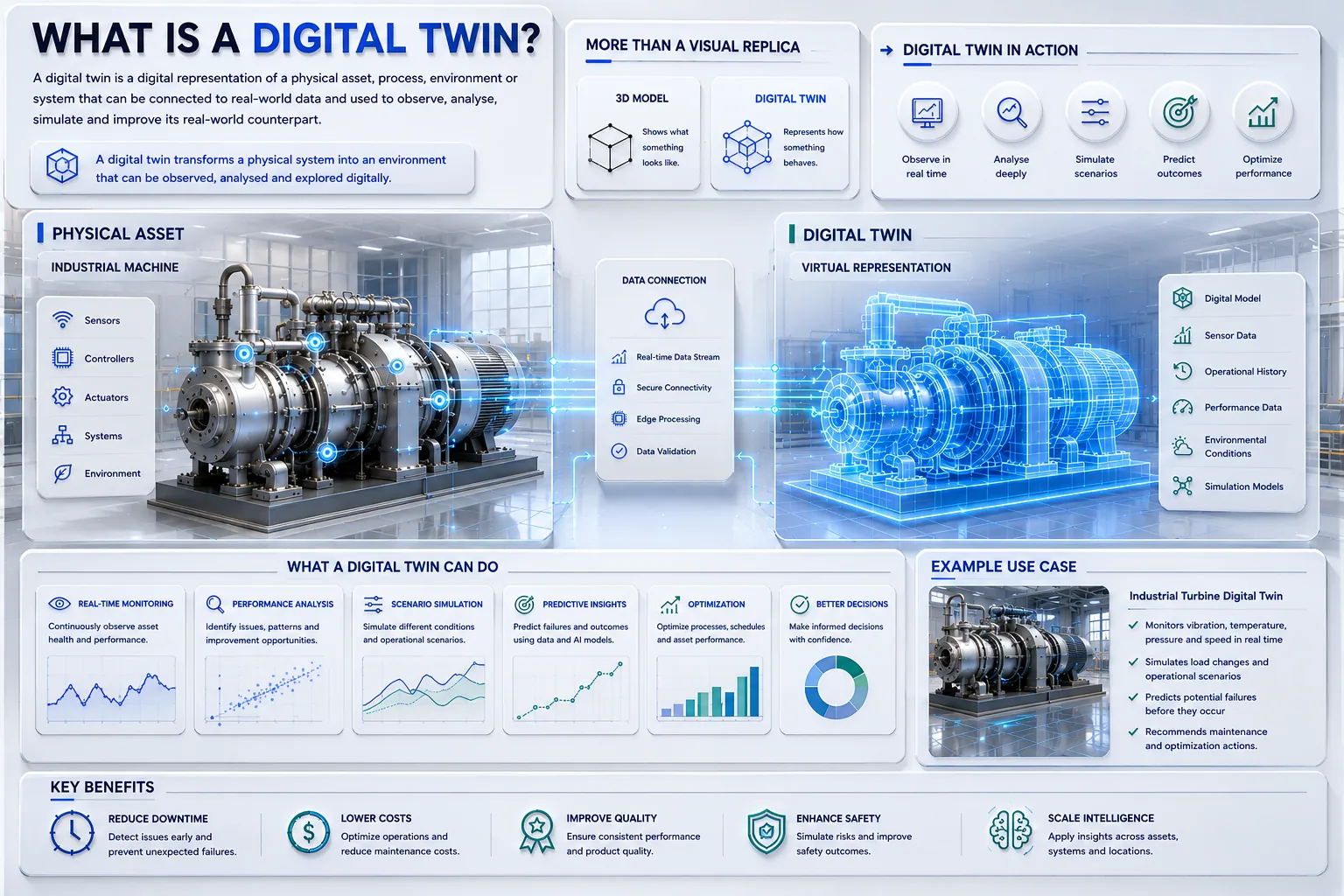
What Is a Digital Twin?
A 3D model shows what something is. A digital twin can explain what it is doing and what may happen next — the layer through which intelligent systems come to understand complex physical environments.
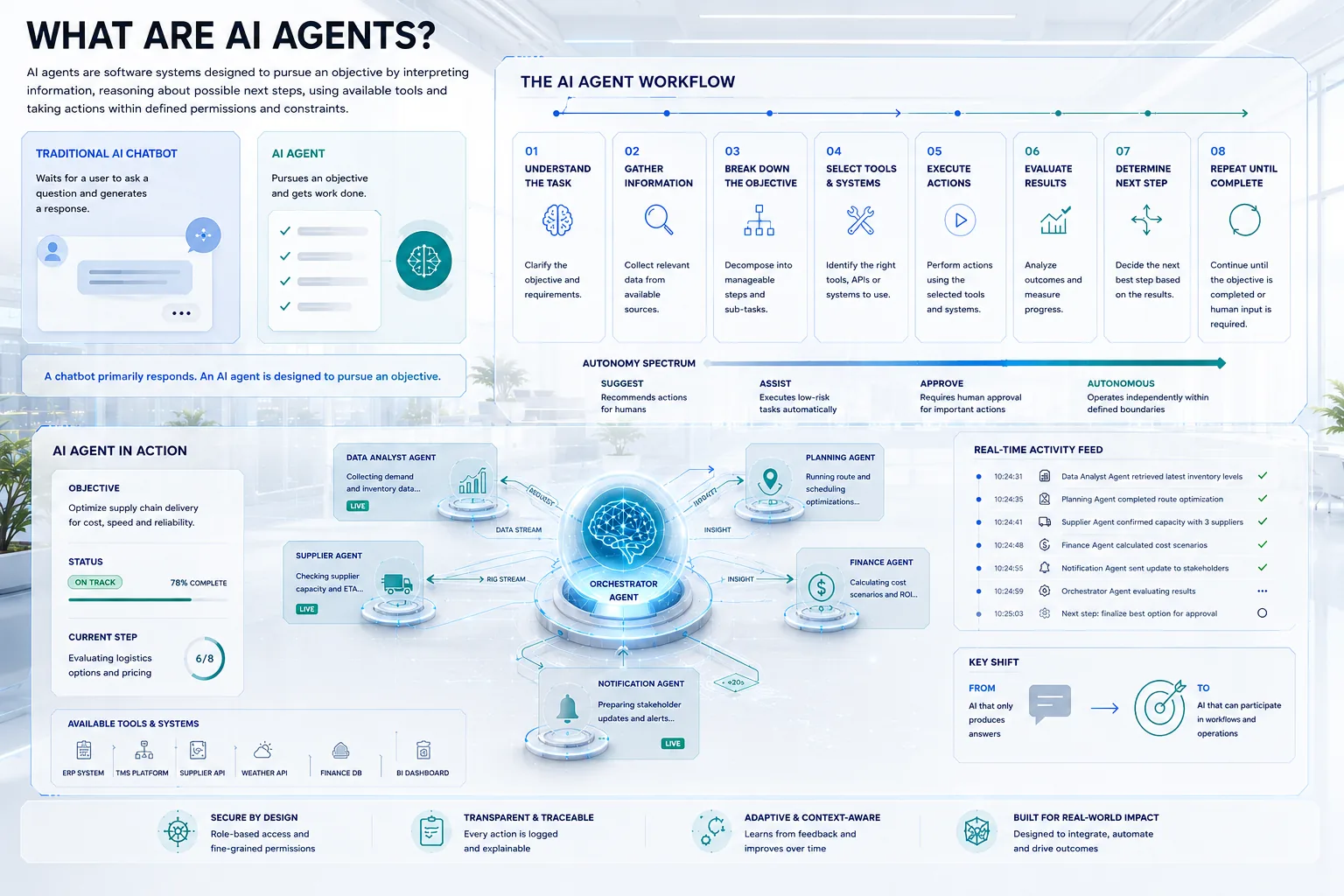
What Are AI Agents?
A chatbot responds. An agent pursues an objective — reasoning, using tools and acting within permissions. The shift is from AI that produces answers to AI that participates in work.
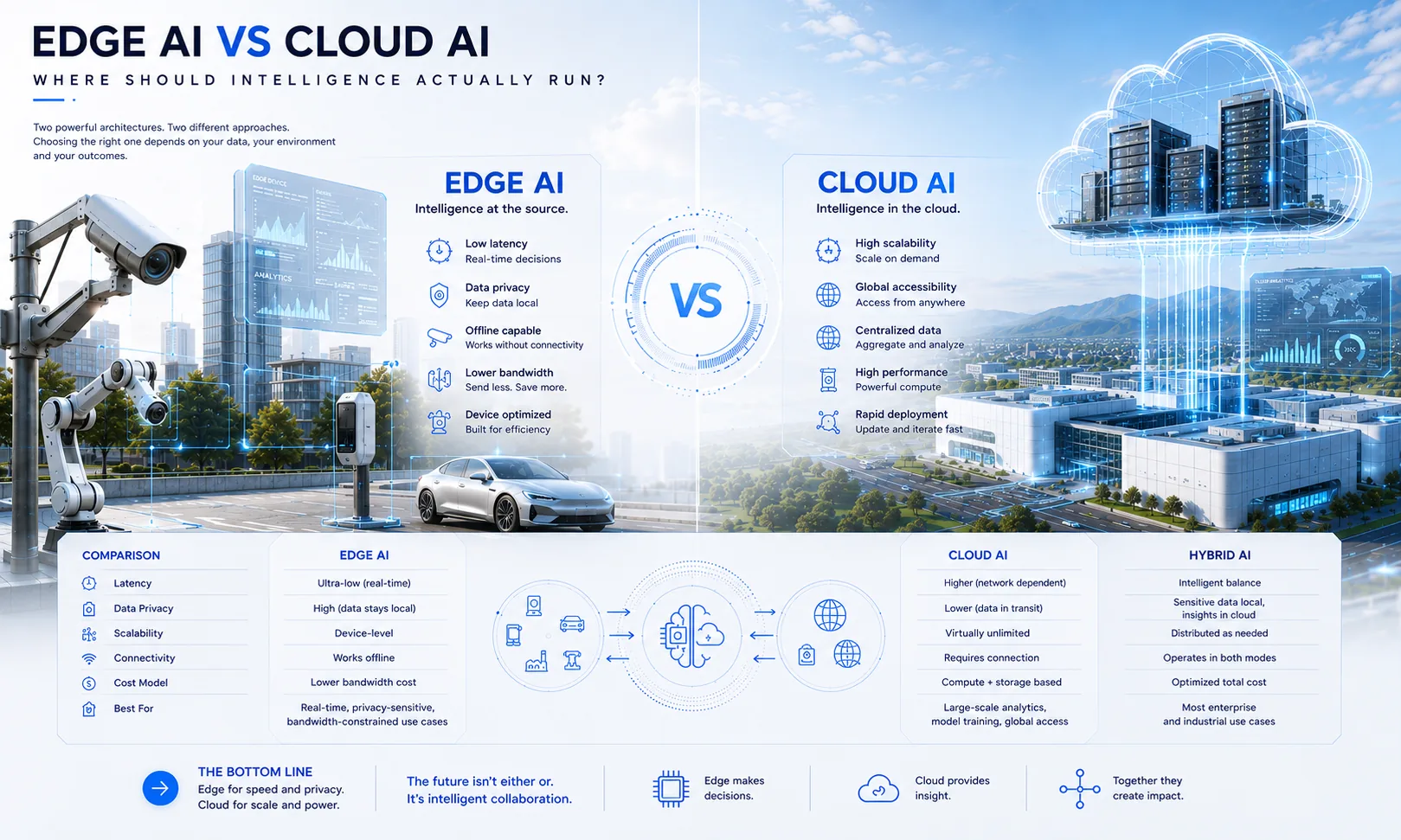
Edge AI vs Cloud AI
The question is no longer which AI model to use, but where intelligence should run — and for most real systems the answer is not one or the other, but an architecture that is intelligently distributed.
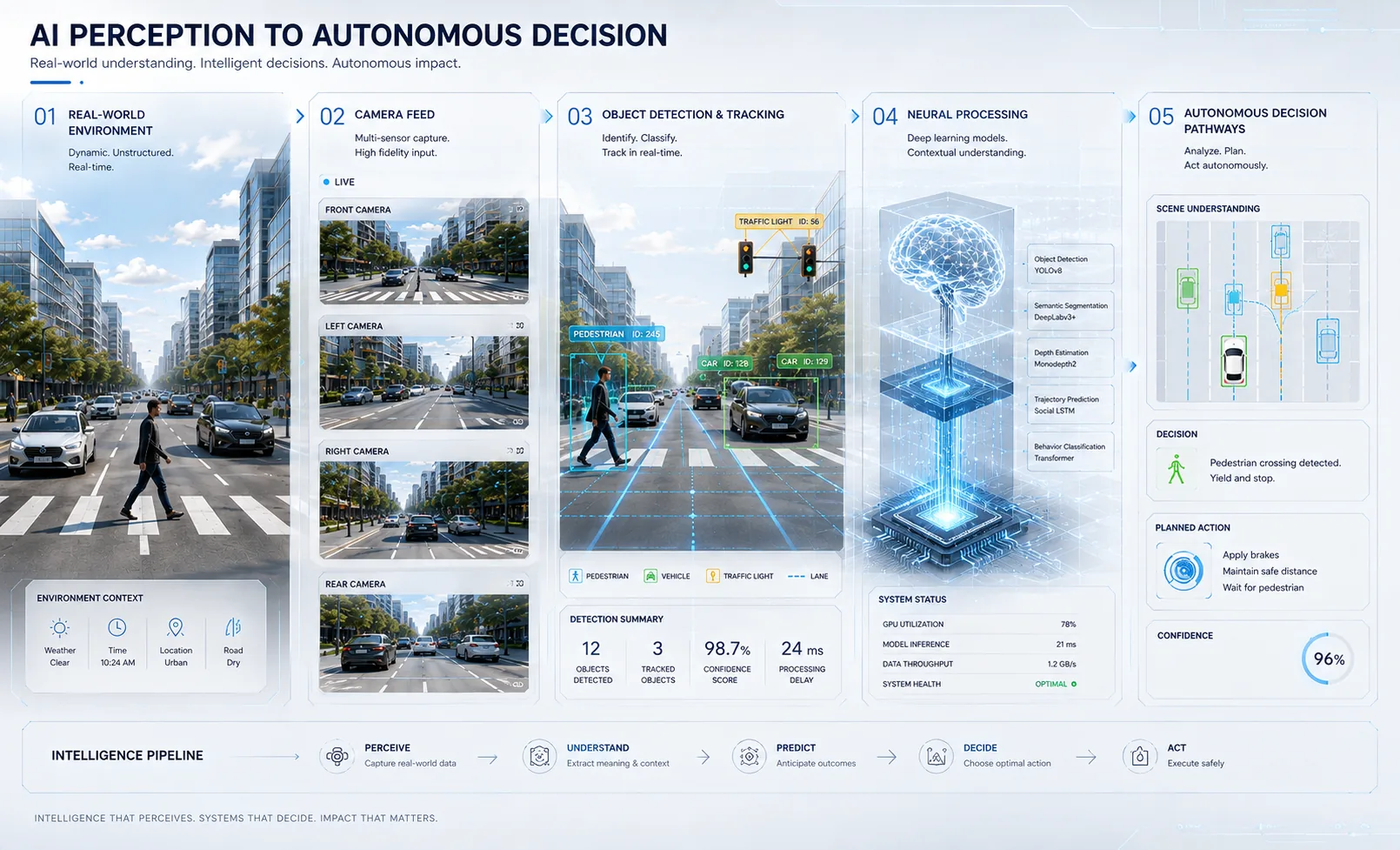
Computer Vision Explained
Computer vision turns pixels into perception — and inside a connected architecture, that perception becomes the sensory layer of autonomous intelligence.
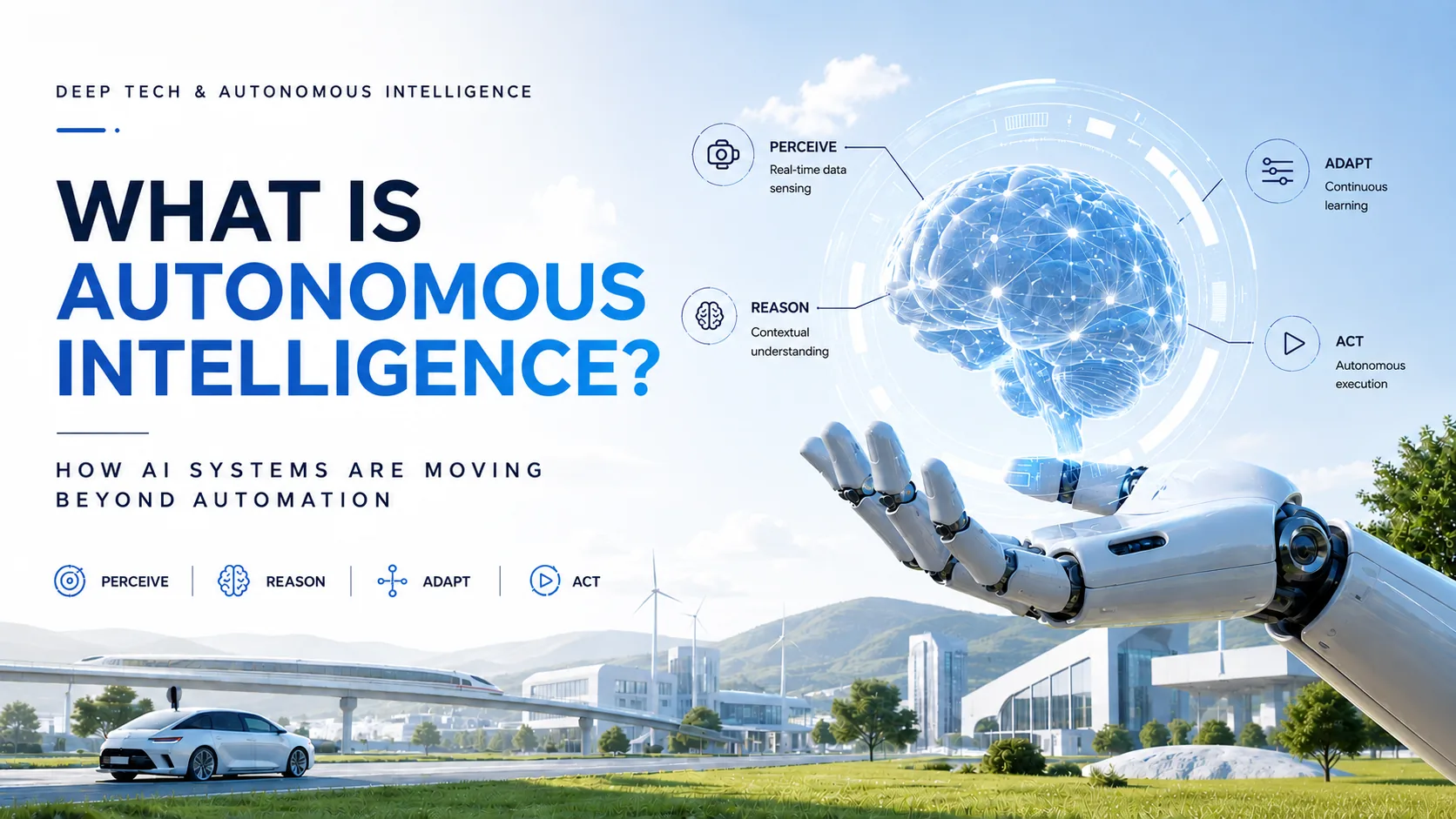
What Is Autonomous Intelligence?
Autonomous intelligence connects perception, context, reasoning, decision and action into one continuous loop — the shift from systems that execute instructions to systems that operate toward objectives.
White Papers
Long-form position papers on where enterprise intelligence is going and what it takes to build it.
03 published
- 01White Paper
The AI-Native Enterprise
Digital transformation made organisations more connected — and more complex. The question is no longer how to digitise the organisation, but how to make it intelligent.35–45 pages · 35–45 minutes - 02White Paper
The Intelligence Loop
Intelligence becomes operational when perception, understanding, reasoning and action are connected through continuous feedback. A model can answer a question; an intelligent loop can participate in an evolving environment.30–40 pages · 30–40 minutes - 03White Paper
The Autonomous Intelligence Imperative
The next generation of organisations will not simply use more AI. They will build systems in which intelligence can continuously perceive, understand, reason, simulate, coordinate and act.30–40 pages · 30–40 minutes
Product Engineering
How intelligent products are actually designed, composed and shipped.
01 published
Architecture Series
Engineering briefs — the system drawn as a blueprint, layer by layer.
01 published
Industry Reports
How one intelligence architecture meets the conditions of real operating environments.
01 published
Technical Notes
Short notes on the principles behind intelligent systems. Numbered, and meant to be read in order.
04 published
- N1
Perception as Infrastructure
Seeing is no longer a feature. It is becoming part of the operating environment.4 minutes - N2
The Case Against Point Tools
Intelligence does not compound when every capability operates alone.4 minutes - N3
Simulation Before Action
The most intelligent action may be the one tested before it reaches reality.4 minutes - N4
Why the Loop Never Ends
Intelligence is not a workflow. It is a continuous relationship with reality.4 minutes
Have a question
we should answer?
Tell us what you're trying to build. The best insights start as real problems from the field.
